Introduction
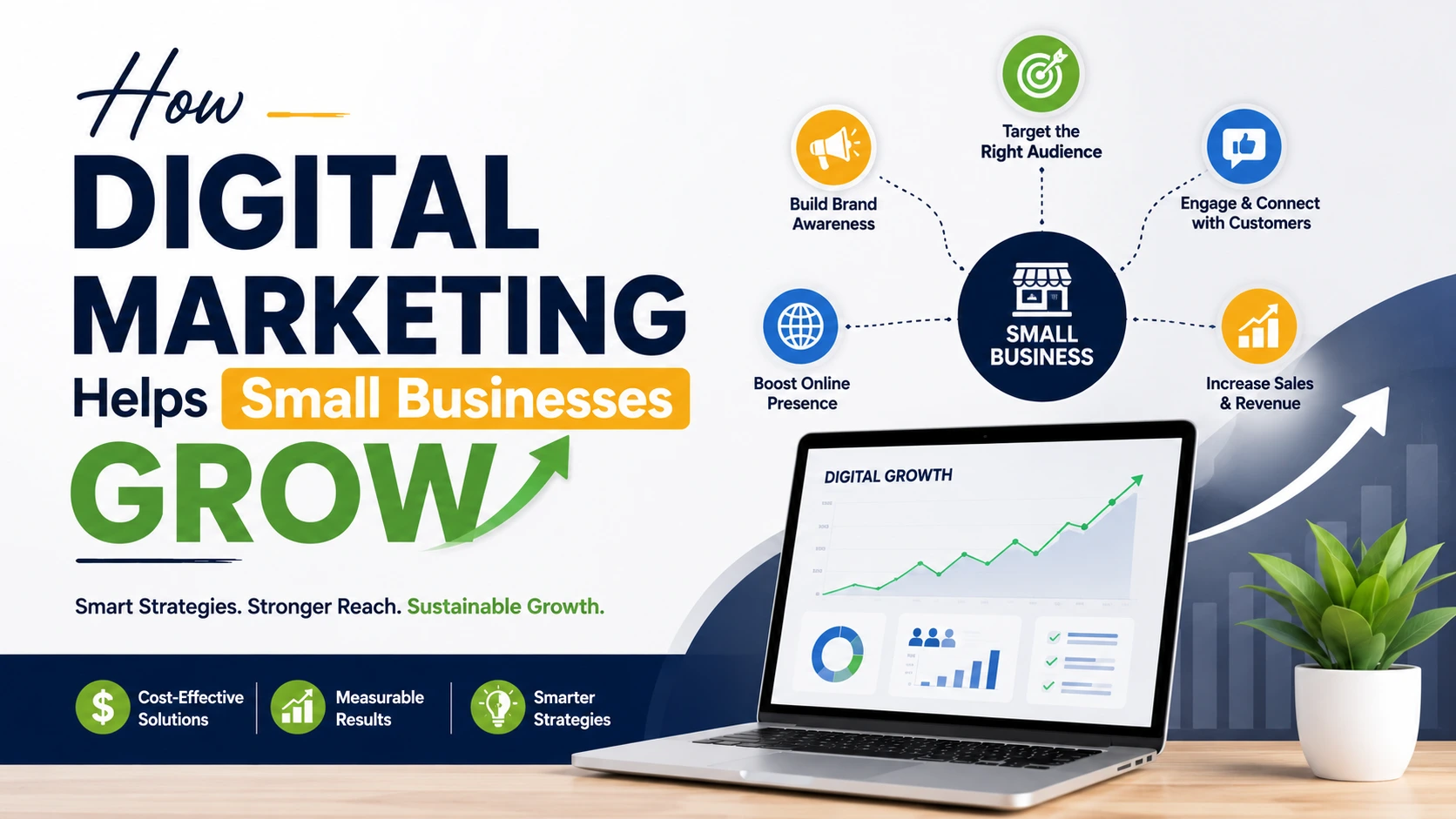
Running a small business today means competing not just with the shop down the street, but with businesses across the country; and sometimes the world. The good news? You don’t need a Fortune 500 budget to compete. Digital marketing has leveled the playing field, giving small businesses the tools to reach the right customers, build trust, and grow revenue without breaking the bank.
In this guide, we’ll break down exactly how digital marketing helps small businesses grow, and how you can start using it to your advantage; even with a modest budget and a small team.
1. Digital Marketing Puts You in Front of the Right Audience
Traditional advertising billboards, TV spots, print ads casts a wide net and hopes the right people notice. Digital marketing flips that approach. With tools like Google Ads, Facebook Ads, and SEO, small businesses can target customers based on location, interests, search intent, and buying behavior.
This means your marketing budget goes toward people who are actually likely to buy from you, not a random audience that may never need your product or service.
Why it matters: Precise targeting reduces wasted ad spend and increases your return on investment (ROI).
2. SEO Builds Long-Term, Sustainable Growth
Search Engine Optimization (SEO) helps your business show up when potential customers search for products or services you offer. Unlike paid ads, which stop generating traffic the moment you stop paying, SEO builds compounding value over time.
A well-optimized website with helpful blog content, local listings, and strong technical performance can keep bringing in organic traffic for months or years after the work is done.
Key SEO tactics for small businesses:
- Optimizing your Google Business Profile for local search
- Publishing helpful, keyword-relevant blog content
- Improving website speed and mobile usability
- Building backlinks from reputable local and industry sites
3. Social Media Builds Brand Awareness and Trust
Platforms like Instagram, Facebook, and LinkedIn allow small businesses to showcase their personality, share customer stories, and build a loyal community — all without a massive advertising budget.
Consistent, authentic social media presence helps customers recognize and trust your brand before they even make a purchase. It also creates a direct line of communication for customer service, feedback, and engagement.
Tip: You don’t need to be on every platform. Focus on the one or two where your target customers spend the most time.
4. Email Marketing Keeps Customers Coming Back
Acquiring a new customer costs significantly more than retaining an existing one. Email marketing is one of the most cost-effective ways to nurture relationships with past customers and turn one-time buyers into repeat customers.
Small businesses can use email to:
- Share promotions and new product launches
- Send personalized recommendations
- Remind customers about abandoned carts
- Build loyalty through newsletters and exclusive offers
With the right email marketing platform, this can be automated, saving time while still feeling personal.
5. Paid Advertising Delivers Fast, Measurable Results
While SEO and content marketing build long-term growth, paid advertising (like Google Ads and social media ads) delivers faster results. This is especially useful for small businesses launching a new product, promoting a seasonal offer, or entering a new market.
The biggest advantage of digital ads over traditional advertising is measurability | you can track exactly how many people saw your ad, clicked it, and converted into paying customers. This data helps you continuously refine your campaigns for better performance.
6. Data and Analytics Help You Make Smarter Decisions
One of the biggest advantages digital marketing offers small businesses is access to real data. Tools like Google Analytics, Meta Business Suite, and email marketing dashboards show you exactly what’s working and what isn’t.
Instead of guessing which marketing efforts are paying off, you can see:
- Which channels bring the most traffic and sales
- What content resonates most with your audience
- Where customers drop off in the buying journey
This data-driven approach allows small businesses to make informed decisions and allocate budget more effectively.
7. It Levels the Playing Field With Bigger Competitors
Perhaps the biggest benefit of digital marketing for small businesses is that it removes the traditional barrier of budget size. A well-optimized website, a smart SEO strategy, and engaging social content can help a small local business outrank or outperform a much larger competitor in search results and social visibility.
Creativity, consistency, and a clear understanding of your audience often matter more than advertising budget alone.
Getting Started: A Simple Digital Marketing Roadmap for Small Businesses
If you’re just getting started, here’s a simple framework:
- Build a strong foundation a fast, mobile-friendly website with clear calls to action.
- Claim and optimize your Google Business Profile for local search visibility.
- Start a blog or content strategy targeting keywords your customers search for.
- Choose one or two social platforms and post consistently.
- Set up email marketing to nurture leads and repeat customers.
- Test paid ads with a small budget to see what converts.
- Track your results and refine your strategy based on real data.
Final Thoughts
Digital marketing isn’t just for large corporations with big budgets | it’s one of the most powerful tools available to small businesses today. From SEO and social media to email marketing and paid ads, each channel offers a way to reach the right customers, build trust, and grow sustainably.
The businesses that succeed online aren’t necessarily the ones spending the most | they’re the ones being consistent, strategic, and customer-focused. Start small, track your results, and scale what works.
Ready to grow your small business online? Start with one strategy from this guide today, and build from there.